- AI Valley
- Posts
- The Year of the Mega IPO (OpenAI, SpaceX, Anthropic)
The Year of the Mega IPO (OpenAI, SpaceX, Anthropic)
PLUS: Google launches ‘Personal Intelligence’

Barsee
15 Jan

Together with

Howdy, it’s Barsee again.
Happy Thursday, AI family, and welcome back to AI Valley.
Today’s climb through the Valley reveals:
Google launches ‘Personal Intelligence’ to make Gemini know your world
Leaked: Google is testing a ‘Gemini Auto Browse’ agent for Chrome
2026 could be the year of the $2 Trillion ‘Mega IPO’
Talent Shakeup: Co-founders leave Mira Murati’s startup to return to OpenAI
Three Giants, one week
Plus trending AI tools, posts, and resources
Let’s dive into the Valley of AI…
PIXVERSE

Courtesy: PixVerse
PixVerse, the AI video generation foundation model enjoyed by over 100 million users worldwide, unveils PixVerse R1, a real-time world model. Unlike conventional AI video generation models, R1 lets you create fully interactive worlds that evolve continuously in real time.
Your ideas don’t just generate video; they unfold endlessly, responding dynamically to every action and input. From immersive storytelling and interactive short films to AI-native games and experimental visual experiences, R1 turns imagination into living, evolving worlds. Don’t just make videos; shape worlds that react, adapt, and evolve.
Read the tech report and try it now with a limited invite code: EHAQXA here.
*This is sponsored
THROUGH THE VALLEY
Courtesy: Google
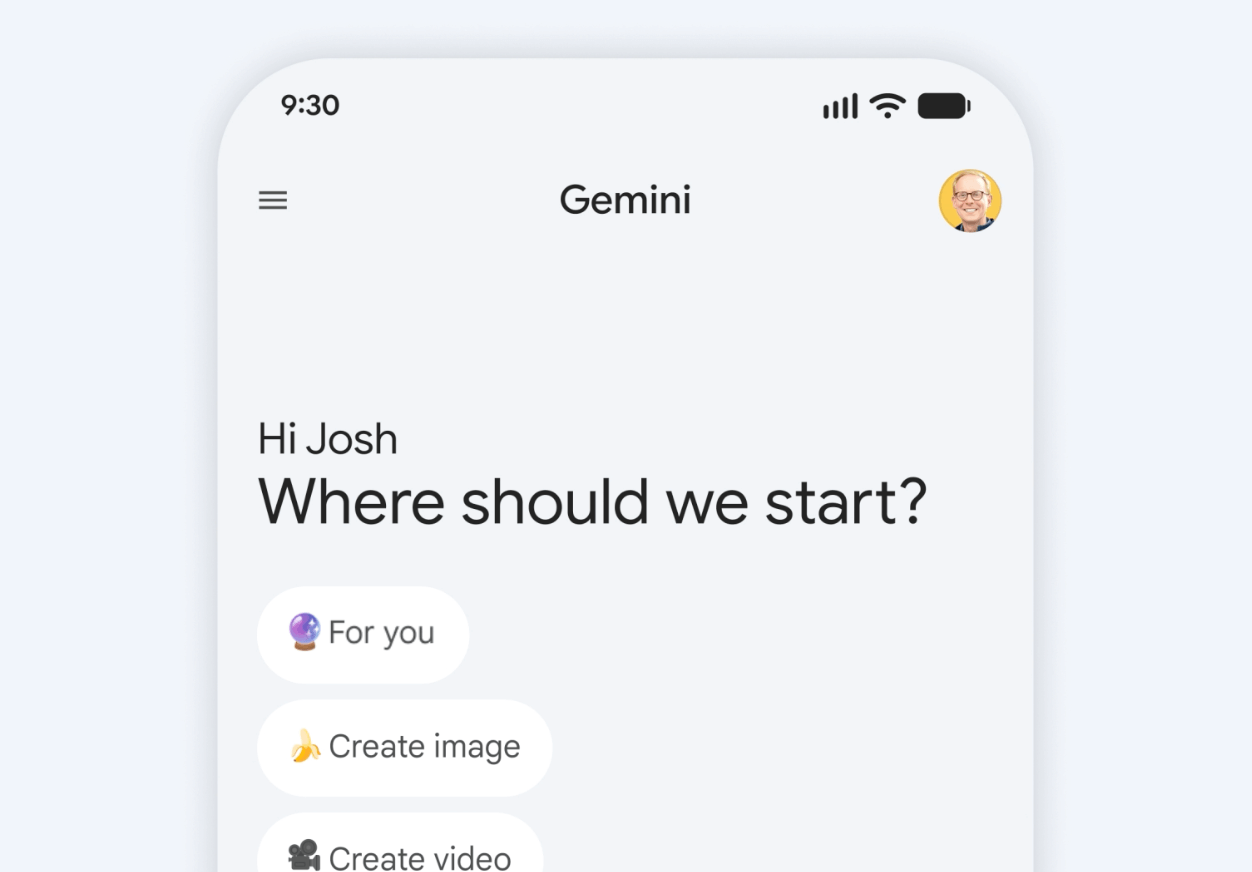
Google has launched a new Gemini feature called Personal Intelligence, which lets users connect apps like Gmail, Photos, YouTube, and Search to personalize AI responses. The idea is to make Gemini more helpful by using your own emails, photos, and activity to answer questions, give recommendations, or find specific details. Google says the feature is off by default, fully opt-in, and lets users choose which apps to connect. Gemini will explain where information comes from and allows chats without personalization. The beta is rolling out in the U.S. to paid Gemini users, with wider access planned later.
Google is getting ready to add an “Auto Browse” feature to Gemini, which would let the AI browse the web, manage tabs, and interact with Chrome on a user’s behalf. The tool has appeared inside Gemini’s internal tools, but is not live yet. Its design suggests a Chrome sidebar integration, similar to agent-style browsing from tools like OpenAI Atlas and Perplexity Comet. Auto Browse could help users research topics, manage browsing sessions, and complete web tasks automatically. Code hints suggest it may launch as a premium feature for Gemini Ultra users, with a broader rollout likely later.
OpenAI and Anthropic have reportedly started early discussions around potential public offerings, alongside SpaceX, setting the stage for a possible wave of major tech IPOs. Together, the three companies are valued at close to $2 trillion, with SpaceX estimated at $800 billion, OpenAI around $500 billion, and Anthropic in talks near $350 billion. If all three companies move forward, the combined offerings could raise more capital than the roughly 200 IPOs completed in the U.S. last year, marking one of the largest public market moments in recent tech history.
Thinking Machines Lab, the startup founded by former OpenAI CTO Mira Murati, has lost two co-founders who are returning to OpenAI. Murati confirmed that co-founder and CTO Barret Zoph has left the company, with Soumith Chintala stepping in as the new CTO. Soon after, OpenAI announced that Zoph, along with co-founder Luke Metz and researcher Sam Schoenholz, would rejoin the company. Thinking Machines, founded less than a year ago, raised a $2 billion seed round at a $12 billion valuation. The departures are notable given the startup’s short history and high-profile team.
PEAK OF THE DAY
Three Giants, One Week

Courtesy: OpenAI
Discussions about the future of AI are often painted in broad strokes. This past week, however, offered something concrete.
In the span of seven days, OpenAI, Anthropic, and Google each released healthcare-specific tools that move beyond general "chat" and into specialized diagnostics. It is no longer just about asking a bot for symptoms; it is about models designed to integrate with data, workflows, and medical imaging.
Here is a breakdown of the three key releases and what they actually mean for the future of patient care.
1/ OpenAI: Contextualizing Patient Data
On Wednesday, OpenAI introduced ChatGPT Health. The breakthrough here isn't conversational fluency (we already have that) but rather integration.
Previously, using AI for health meant manually typing in symptoms, often resulting in generic advice. ChatGPT Health bridges this gap by connecting directly to personal health ecosystems, ingesting data from Apple Health, wearables, and secure electronic health records (EHRs).
This allows the model to pivot from a search engine to a longitudinal monitor. It analyzes actual trends in sleep, heart rate, or blood panels over time to provide context, turning raw data into actionable insight.
2/ Anthropic: The Clinical Workflow
While OpenAI courted the consumer, Anthropic targeted infrastructure with Claude for Healthcare.
Hospitals are currently bogged down by administrative friction: clinical coding, prior authorizations, and summarizing complex patient histories. Anthropic leverages its "Constitutional AI" framework to handle these tasks with a strict focus on safety and citation.
Designed to synthesize medical literature and patient records, the model cites specific sources (like PubMed) to verify its outputs. It functions as a high-level clinical assistant, reducing the "paperwork" burden that slows down actual care.
3/ Google: Advanced Imaging Analysis
The most technical leap came from Google DeepMind with MedGemma 1.5.
Until recently, AI vision models were largely limited to 2D images (like X-rays). MedGemma 1.5 is significant because it interprets 3D medical images, such as volumetric CT scans and MRIs.
By releasing this as an open-weight model, Google has given developers a tool that can "scroll" through 3D space to identify anomalies. This lowers the barrier to entry for advanced imaging analysis, making high-level diagnostics accessible on standard hardware.
The New Baseline: The $20 Subscription
Viewed together, a clear trajectory emerges regarding access and cost. We are seeing a convergence of capabilities:
Monitoring: OpenAI handles the continuous stream of patient data.
Analysis: Google processes complex imaging.
Verification: Anthropic assists with literature review and clinical guidelines.
While these tools do not replace human doctors, they dramatically raise the baseline of care available to the average person. Diagnostic capabilities that previously required specialized appointments and significant wait times are becoming accessible software features.
We are approaching a point where a $20/month subscription provides a sophisticated, multi-modal medical analysis layer, supporting both the patient and the doctor in making better decisions.
TRENDING TOOLS
Atom > AI employees that help validate ideas, build products, and acquire customers
Actforge > Let Claude handle all your non-coding work so you can focus on building
Do Anything > Finish your to-do lists using agents that work autonomously, rest, and maintain their own identity
SkillSync > Helps companies discover elite but overlooked engineers on GitHub based on what they have actually built
SkillSMP > A full agent marketplace with 60,000+ Claude skills ready to use today.
THINK PIECES / BRAIN BOOST
THE VALLEY GEMS
THAT’S ALL FOR TODAY
Thank you for reading today’s edition. That’s all for today’s issue.

💡 Help me get better and suggest new ideas at [email protected] or @heyBarsee
👍️ New reader? Subscribe here
Thanks for being here.
REACH 100K+ READERS
Acquire new customers and drive revenue by partnering with us
Sponsor AI Valley and reach over 100,000+ entrepreneurs, founders, software engineers, investors, etc.
If you’re interested in sponsoring us, email [email protected] with the subject “AI Valley Ads”.