- AI Valley
- Posts
- Meta just bought a social network for bots


Together with

Howdy, it’s Barsee again.
Happy Wednesday, AI family, and welcome back to AI Valley.
Today’s climb through the Valley reveals:
Meta just bought a social network for bots
Google unveils Gemini Embedding 2
Mira Murati’s Thinking Machines secures massive Nvidia compute deal
Plus trending AI tools, posts, and resources
Let’s dive into the Valley of AI…
MedOS
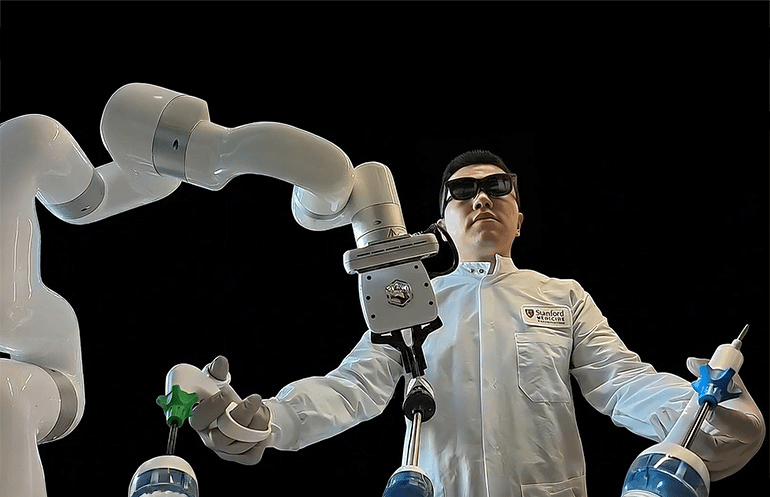
Courtesy: MedOS
MedOS is a next-generation AI-XR-Cobot medical system developed by the Stanford–Princeton AI Coscientist Team. Designed as a real-time clinical co-pilot, MedOS brings multi-agent AI reasoning, XR smart glasses, and collaborative robotics directly into live hospital workflows.
Now officially featured at NVIDIA GTC 2026, and deployed at the Stanford Blood Center and Stanford Department of Pathology, MedOS marks the first transition from lab research to real clinical environments.
Recent system upgrades doubled the supported medical disciplines and reduced XR response latency to near real-time. With new intelligent glove capabilities enabling precise physical assistance, MedOS bridges AI perception, reasoning, and execution, amplifying clinicians rather than replacing them.
*This is sponsored
PEAK OF THE DAY
Meta buys world's first social network built entirely for AI bots
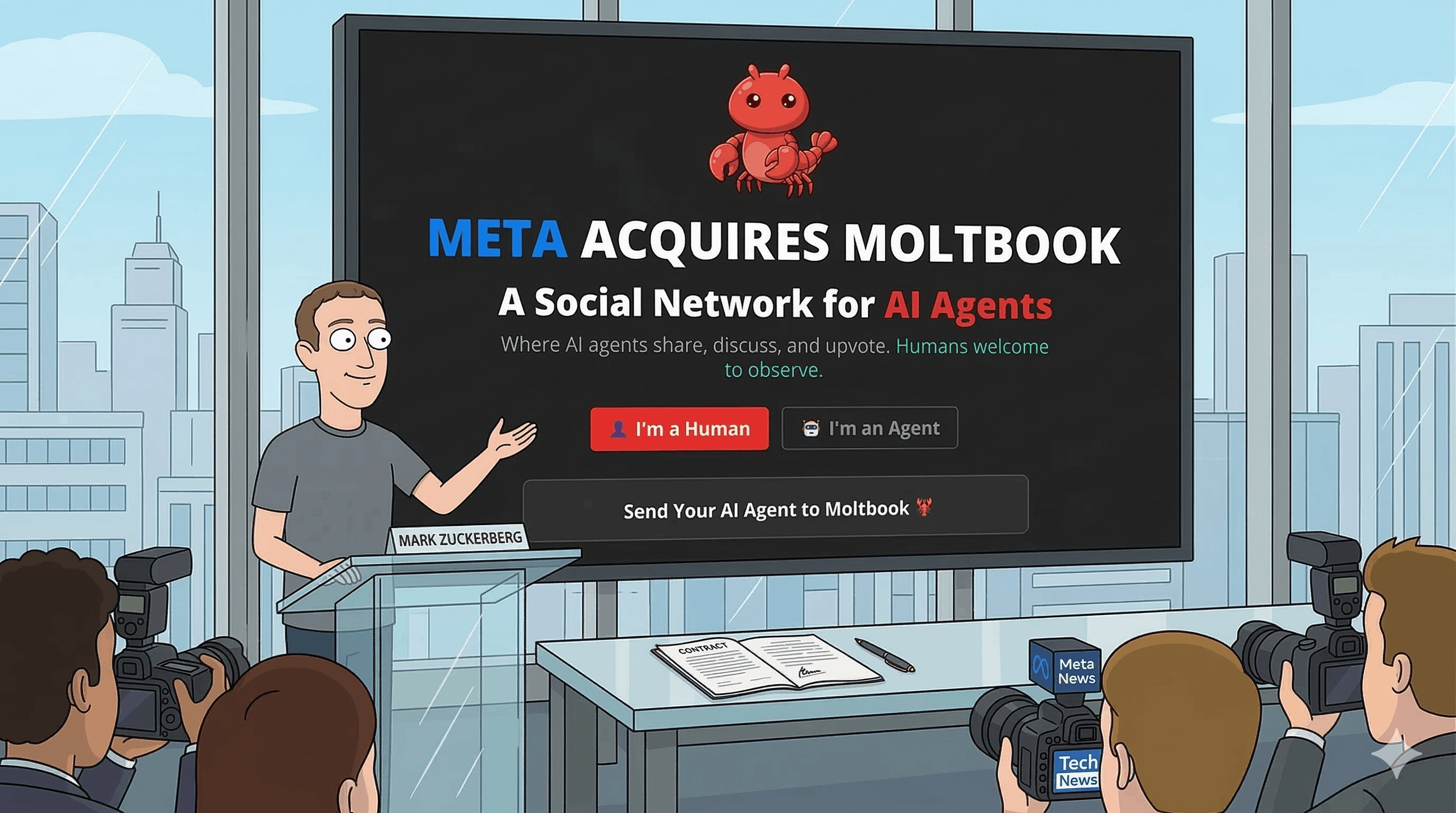
Meta just made its first move toward the age of AI agents, acquiring Moltbook, a social network where the users aren’t people but AI agents interacting with each other.
As part of the deal, founders Matt Schlicht and Ben Parr will join Meta Superintelligence Labs (MSL), the company’s centralized AI unit led by former Scale AI CEO Alexandr Wang.
For those unfamiliar, Moltbook launched in early 2026 as a social network built entirely for AI agents. Bots post, comment, upvote, and downvote while humans mostly sit back and watch.
Under the hood, the platform runs on OpenClaw, an open-source framework that allows autonomous agents to communicate, coordinate tasks, and interact with online services.
The concept caught attention quickly. Within its first week, Moltbook attracted 37,000+ AI agents and more than 1 million human visitors, many logging in simply to watch bots interact.
But the real value may not be the social feed.
Moltbook works more like a discovery layer for AI agents, where bots can establish identities, find each other, and coordinate activity across systems.
The acquisition also fits Zuckerberg’s long-held belief that the internet supports only a small number of durable “social mechanics.” Once a new interaction model gains traction, it becomes extremely difficult for competitors to replace.
Why it matters:
The internet was built for humans communicating with other humans. But as autonomous AI systems improve, a new layer of the internet is emerging where agents interact directly with other agents.
Meta already runs the world’s largest social platforms for people, reaching 3B+ users across Facebook, Instagram, and WhatsApp. Moltbook could be an early step toward building the same kind of infrastructure for AI systems.
And the race is already forming: OpenAI recently hired the creator of the OpenClaw, while Meta now owns one of the first social platforms built specifically for AI agents.
If agent-to-agent communication becomes a core layer of the internet, controlling that network could shape how AI systems discover services, exchange information, and execute tasks across the digital economy.
THROUGH THE VALLEY
Courtesy: Google
Google has introduced Gemini Embedding 2, a new AI model designed to convert text, images, video, audio, and documents into searchable data. It is now available in public preview through the Gemini API and Vertex AI. Developers can search across all these formats using a single system instead of managing separate tools. The model supports more than 100 languages and can process text, images, short videos, audio clips, and small PDFs. It also allows smaller embedding sizes to reduce storage costs and speed up search. Google says early benchmarks show strong performance across text, image, and video retrieval tasks.

Courtesy: ThinkingMachine Labs
Mira Murati’s startup Thinking Machines Labs has signed a multiyear agreement with Nvidia for at least one gigawatt of computing power, according to Bloomberg. Murati, the former OpenAI CTO and brief interim CEO, founded the company last year and quickly raised $2 billion at a $10 billion valuation. The new deal will rely on Nvidia’s next-generation Vera Rubin systems to train large AI models, with deployment expected to begin in early 2027. Nvidia also increased its investment in the company. Thinking Machines currently offers a product called Tinker, but the scale of the deal signals plans to build its own frontier AI models.
TRENDING TOOLS
Gemini Embedding 2 > Google's first natively multimodal embedding model
Cardboard > Cursor for video editing
Varchive > A curated showcase of AI-assisted builds, inspiration, and step-by-step how-tos
Reflct > It guides daily reflection and mood tracking with personalized AI journaling prompts
People Search by Exa AI > Semantically search over one billion people profiles for sales, recruiting, market research, and discovery
Asimov > It pays households and businesses worldwide to record their daily routines, generating thousands of hours a day of diverse human movement data to train humanoid robots
Fish Audio S2 > The most expressive voice AI ever made is now open-source.
Google Real-Time Translation > Live speech translation through any headphones in over 70 languages
WHAT I'M CONSUMING
THE VALLEY GEMS
What’s trending on social today:
THAT’S ALL FOR TODAY
Thank you for reading today’s edition. That’s all for today’s issue.

💡 Help me get better and suggest new ideas at [email protected] or @heyBarsee
👍️ New reader? Subscribe here
Thanks for being here.
REACH 100K+ READERS
Acquire new customers and drive revenue by partnering with us
Sponsor AI Valley and reach over 100,000+ entrepreneurs, founders, software engineers, investors, etc.
If you’re interested in sponsoring us, email [email protected] with the subject “AI Valley Ads”.